
Longview Previous Residents by Era
A backward address history separates recorded ownership from a household’s presence at the address. Begin with the time period that matters, then choose the source created nearest to it. Gregg County’s historical direct and reverse deed indexes and deed books begin in 1873. The accessible official County Clerk material does not state how far the present online portal reaches, so an online result must never be turned into a claimed coverage boundary. For earlier or unavailable material, the Clerk counter, phone route, and Texas State Library reel guide are part of the normal path.
| Source | Years It Covers | Where Held | What It Shows |
|---|---|---|---|
| Gregg County Clerk official-record route | Current online coverage not stated in accessible official material | County Clerk and its Aumentum link | Recorded parties, instrument details, legal-description leads |
| Direct/reverse deed indexes and deed books | Beginning 1873; Deed Volumes A–R through 1901 in the cited early guide | Texas State Library Gregg County reels and County Clerk | Historic instrument trail, volume/page, grantor and grantee leads |
| Longview criss-cross directories | 1967–1996, with 1983 missing in the LOC guide | Library of Congress collection route | Address-to-name lead for the listed year |
| Longview city directories | Listed runs from 1932 through 1993–94, with gaps | Texas State Library list and local reference sources | Dated household or address notation where a volume includes it |
| Library census, newspaper, and cemetery material | Varies by item and access route | Mary Lee Robbins Room | Independent time points to test a household transition |
For a recent recorded transfer, start with the Clerk’s official route and retain the instrument information. For a nineteenth-century question, start with the State Library guide’s direct/reverse index and reel information. For a household question in the late twentieth century, use a directory point and test it against another dated source. A record can be useful without answering every part of the address history.
Longview Deed Index Access Limits
Insider tip. The official Clerk page is the reliable doorway to the County Clerk Records Search, but the Aumentum portal timed out during research and did not expose live grantor/grantee field labels or a sample result. Its accessible official page also does not state a current online coverage range. That is not evidence of a short or long online history. It is a reason to record the failed search, then use the Clerk’s counter or phone route and the Texas State Library guide for the historic series.
The Gregg County Clerk public-record search is the source for this portal view.
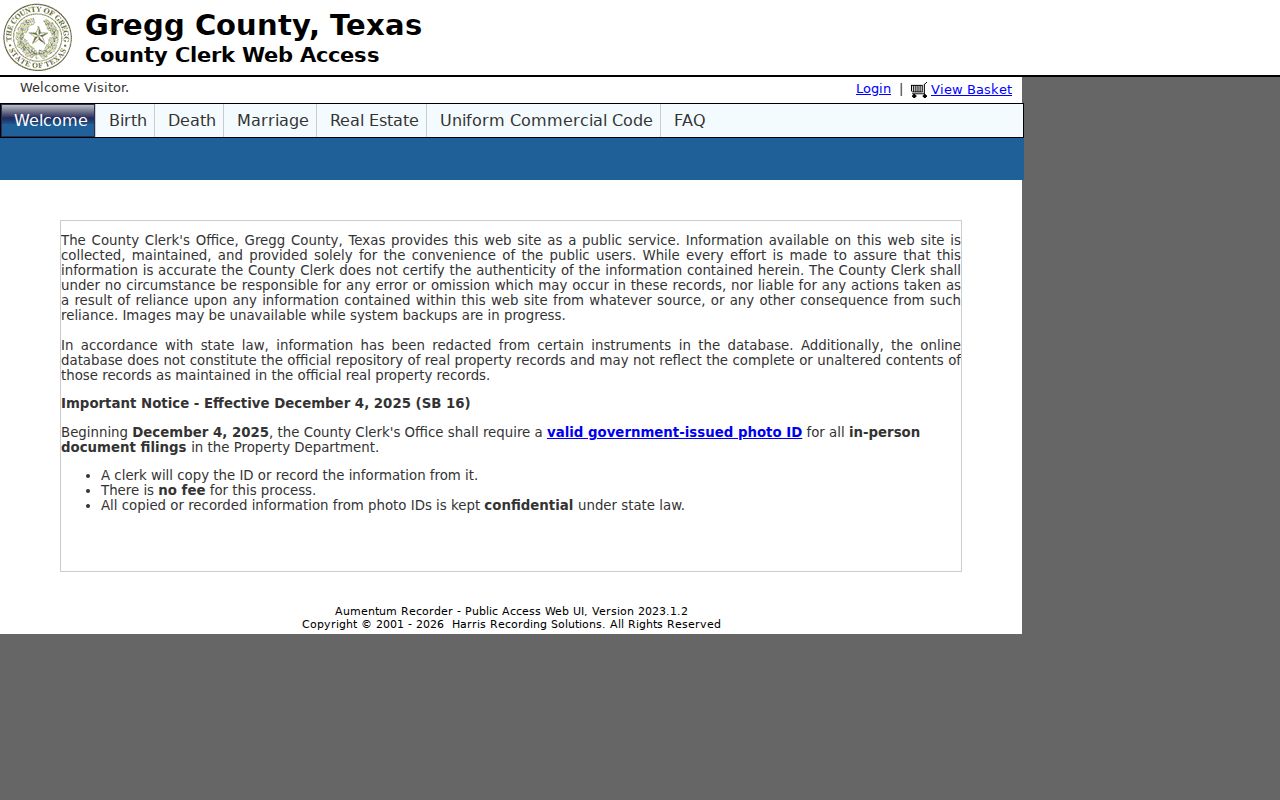
The capture confirms the official portal route, while the field and sample-entry gap means that search labels and results still require confirmation at use time.
The County Clerk’s browser notice also refers to older image-viewing compatibility text. Treat that as a practical interface warning, not a statement about record availability. The office is at 101 E. Methvin Street, Suite 200, with public counter hours Monday through Friday 8:00–12:00 and 1:00–5:00; its main number is 903-236-8430.
Longview Previous Residents Before Portals
The Texas State Library Gregg County microfilm guide is the fallback map when a portal does not reveal an earlier instrument. It identifies deeds, direct/reverse indexes, births, deaths, marriages, probate minutes and estate records, county minutes, and district-court civil material. The guide names early deed books and indexes beginning in 1873, so it supports a documented historic trail without pretending that today’s online index reaches that far.
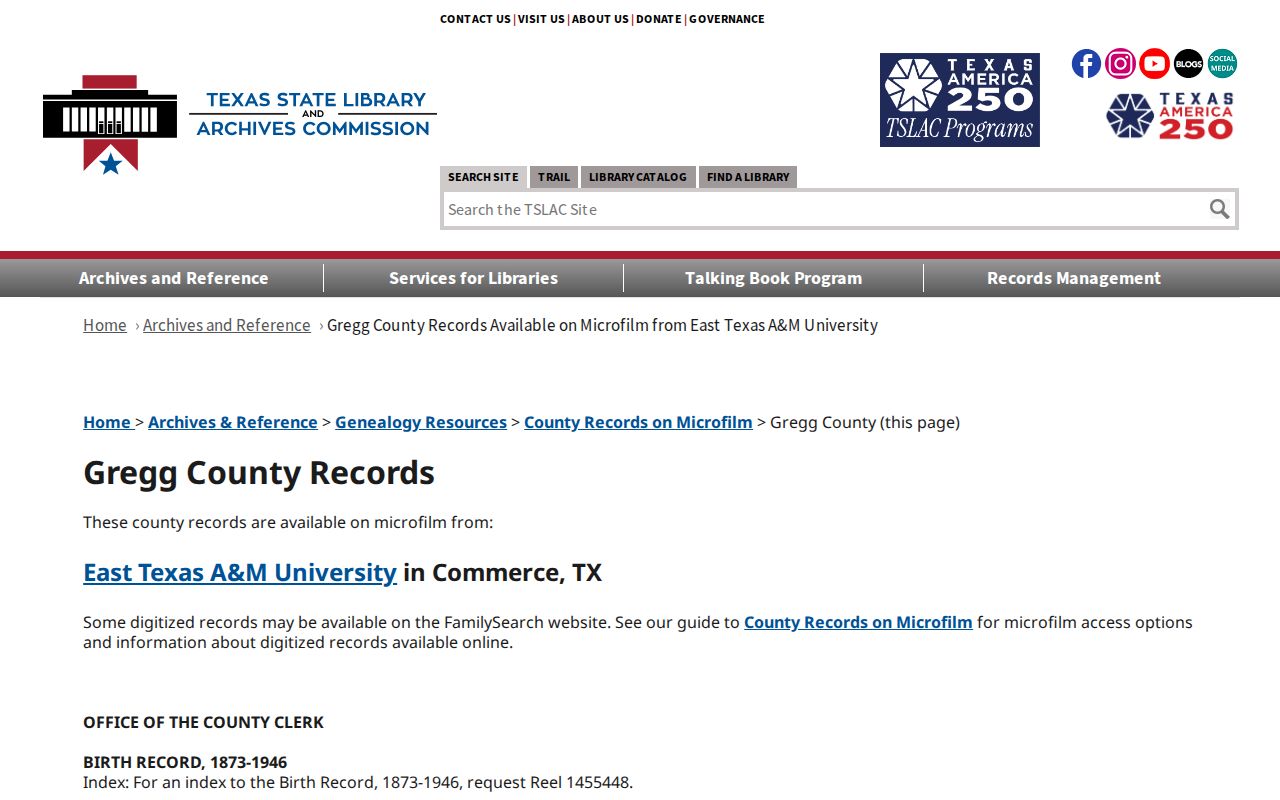
Use the reel and volume details from the guide in a reference request, then retain the exact index, book, or page consulted as part of the address history.
Gregg County’s preservation work is another reason to keep both a physical-volume and digital-image note. Reporting in 2025 described restoration of the 1870s Deed Record Volume D and roughly a dozen books, with digital copies intended as part of the return to public access. A book’s restoration schedule and an online image’s availability need not match.
Note: When a source guide and a portal disagree, preserve both citations and ask the custodian which record series supplies the controlling copy.
Longview Previous Residents and Deeds
Use the current address only as a way to reach the parcel ID and legal description in Gregg Appraisal District records. Then move to the County Clerk’s official-record route for the recorded instrument trail. The deed chain records conveyances and related instruments, not a complete list of everyone who lived at an address. A person named in a deed may be a buyer, seller, trustee, lender, executor, or another recorded party. The document type and its date matter as much as the name.
- Normalize the current address, including directional, suffix, unit, and any earlier street spelling, then note the parcel ID and legal description from GCAD.
- Use the Gregg County Clerk page to reach the official records-search route, and look for the current transfer by recorded party and date range when the portal responds.
- Record the instrument number or book and page, document type, recording date, legal description, and any prior instrument cited in the image.
- Search the prior recorded party in the appropriate grantor or grantee direction, then repeat only after checking whether the item is a deed, deed of trust, release, assignment, easement, plat, lien, or correction.
- When the needed volume is beyond the interface or the portal fails, contact the Clerk at the counter or by phone and use the Texas State Library Gregg County microfilm guide for historic direct/reverse indexes and deed books.
- Grantor
- The party transferring an interest in a recorded instrument. The role must be read from the document, not guessed from a name.
- Grantee
- The party receiving an interest in that instrument. A grantee does not establish who occupied the address.
- Chain of title
- The sequence of recorded instruments used to follow an interest in the same parcel backward through time.
- Legal description
- The lot, block, subdivision, tract, or survey wording that ties older instruments to a parcel more reliably than a changing street address.
Note: Preserve both the book/page or instrument reference and the legal description, because an older deed can use a street name or number that no longer matches current addressing.
Longview Address Changes Over Time
Do not force an old street number into a current parcel result. Longview 9-1-1 Addressing corrects odd/even errors, out-of-sequence numbers, insufficient development addresses, and ordinance nonconformity. A City correction does not automatically update USPS, utilities, GCAD, banks, insurers, or navigation providers. For a house-history trail, put the old number, current number, street spelling, source date, and reason for the change beside each other before searching deeds or directories.
The recorded-instrument confirmation point is the Gregg County Clerk office.
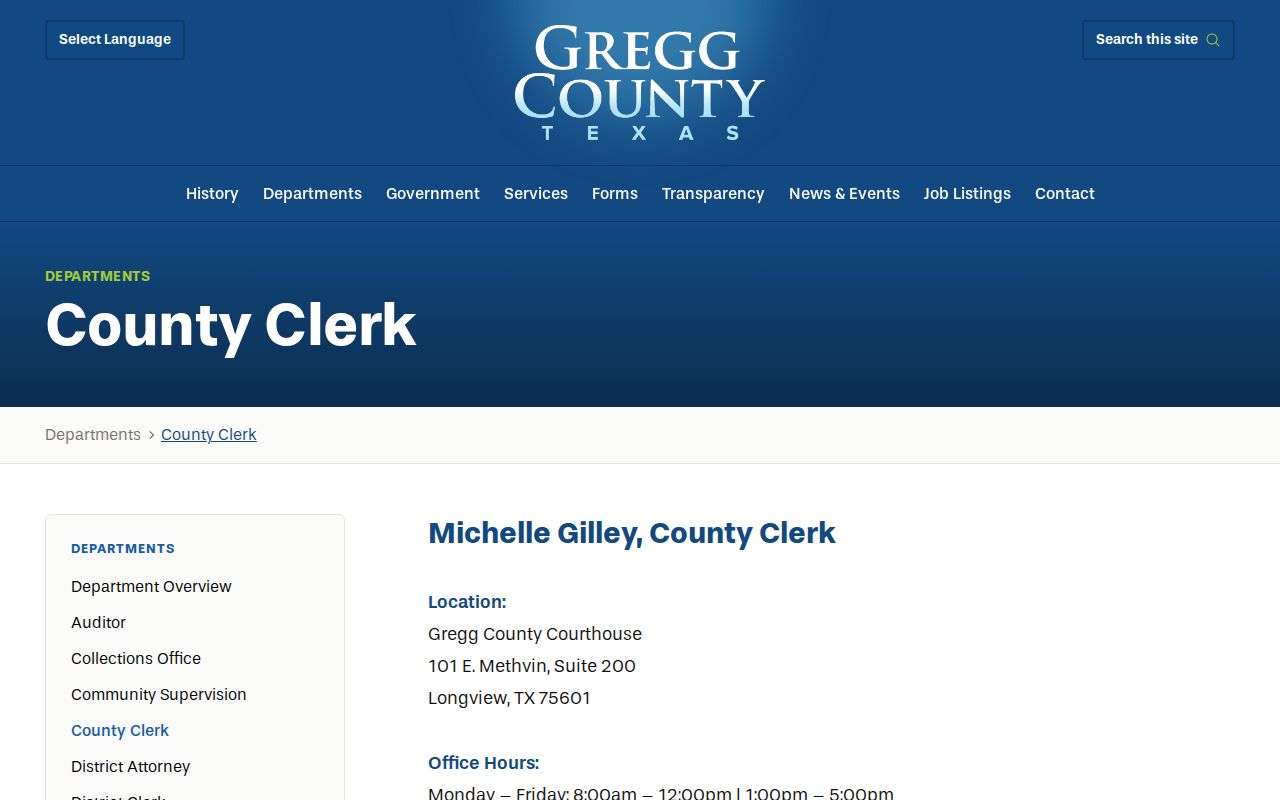
The Clerk route supplies the custodian context for a deed reference that begins in a directory, parcel map, or address correction note.
Longview Junction’s 1904 annexation, Greggton’s 1959 annexation, and later changes around Spring Hill and Pine Tree show why a historic address can move from a county or neighboring-place context into the city without the structure moving. Jurisdiction, postal city, and address form should each be dated.
Longview Directory-Census Sequence
A household sequence tests presence at an address rather than title. Use this order: normalized address → nearest directory year → criss-cross address listing when available → library census material → dated newspaper, cemetery, or probate lead. Each step has a different purpose. Directories can be irregular, a census record may use a different geographic arrangement, and an obituary can describe a relationship without proving the address on the date of publication.
- Pick the closest known Longview city-directory volume and transcribe the page, address spelling, and listing form.
- Check the next available volume and, for 1967–1996, request the criss-cross listing for the same address when it exists.
- Use Robbins Room census material or microfilm sources to test the period between directory points, recording the source and date rather than relying on a name alone.
- Use a historical newspaper, cemetery record, probate index, or deed to explain a move, death, estate transition, or address change.
The Robbins Room local-history collection is the source for this library access route.
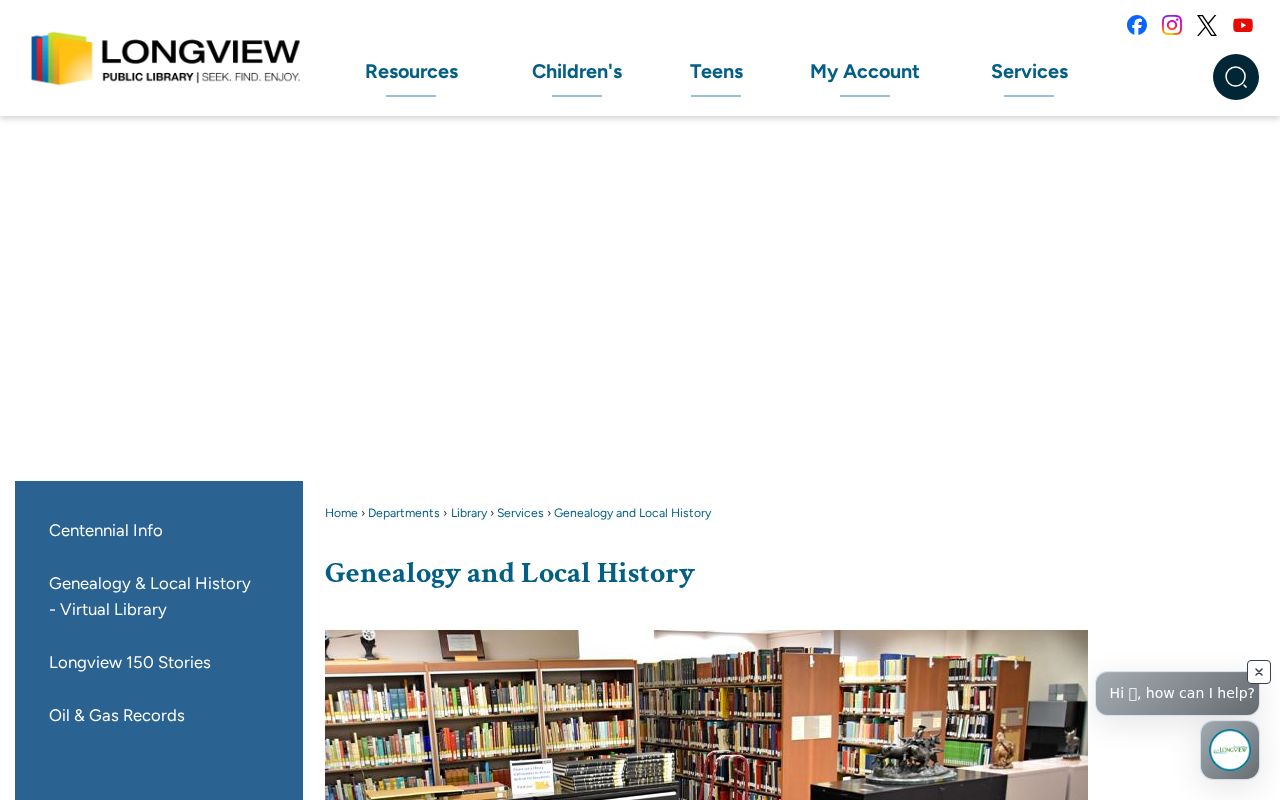
The library route connects city directories, cemetery records, microfilmed census material, newspapers, and librarian assistance without treating any one collection as complete.
Note: A directory date and a census date are separate time points, so label both rather than collapsing them into one period.
Longview Previous Resident Endpoints
When a deed trail becomes older than the modern interface, the 1940 Gregg County archival inventory can identify historical record series and former custodians. It is a finding aid, not a promise that every series is online or still housed in the same place. Use it alongside the State Library reel guide when an older deed, probate minute, court paper, or county record needs a specific request.
The digitized Gregg County archive inventory is the source for this record-custody view.
Use the inventory to refine a series name and date range before contacting a custodian, especially when a portal search gives no useful result.
For historical or deceased-person research, City cemetery records, an obituary, a vital index where access rules permit, and probate can provide separate dated evidence. Keep the statement each record actually makes: burial, notice, estate, or recorded instrument. That restraint is what turns a collection of names into a defensible past-residents history.
Longview Previous Residents in Households
Recorded owners are only one part of the past-residents question. A Longview criss-cross directory can offer an address-to-name lead in its listed year, while a conventional directory may put an address beside a household listing. The collection years, access routes, and entry-reading cautions belong to the Longview city directories collection page. Pair each directory point with census material, a newspaper notice, cemetery record, or probate lead before connecting it to a particular person.
Obituaries and cemetery records can explain a household transition, especially for historical or deceased people. The City Secretary’s cemetery routes cover Grace Hill, White, and Greenwood, and the Robbins Room holds cemetery and microfilm material. Probate research can add an estate date or land description, but an estate entry is not proof of current ownership or of a person’s address on its own.
Lawful use. Longview past-residents research fits family history, estate questions, and a property’s documented history. Do not use a historical address trail to target, track, stalk, or harass a living person.